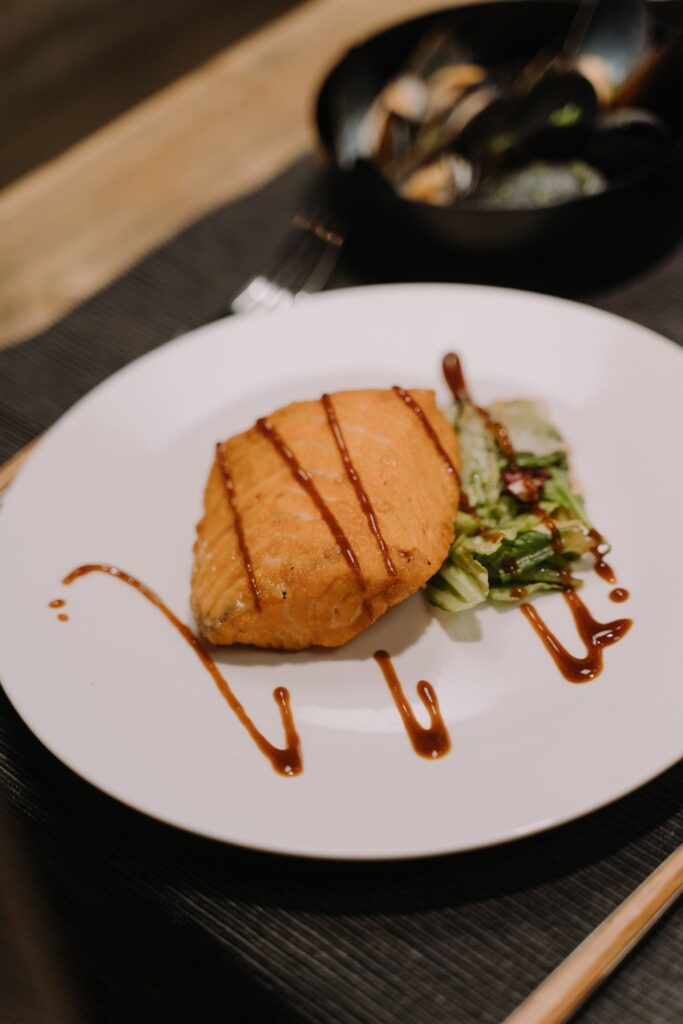
Quick answer: Cook salmon fillets at 180°C (350°F) for 10–12 minutes for a standard 2.5cm-thick fillet (about 130–150g), skin-side down if skin-on. Thinner tail pieces need 7–9 minutes and thick centre-cut fillets 12–15. Salmon is done when it flakes easily and the centre reaches about 60–63°C. No flipping needed.
Salmon is one of the best things to cook in an air fryer. It is quick, there’s no fishy frying pan to scrub, and the circulating air gives the top a lightly roasted finish while the inside stays moist. The catch is that salmon goes from perfect to dry in a couple of minutes, so it pays to know your fillet thickness and check it early. Here are times by thickness, how to tell when it’s done, how to stop it sticking, and a few simple glazes.
Air Fryer Salmon Times by Thickness
All times are at 180°C (350°F) in a 4–6L basket air fryer, fillets in a single layer, without flipping. Measure the thickest part of the fillet, not its weight.
| Fillet | Thickness | Time |
|---|---|---|
| Thin tail piece | 1.5cm | 7–9 mins |
| Standard supermarket fillet (130–150g) | 2.5cm | 10–12 mins |
| Thick centre-cut fillet (180g+) | 3.5cm+ | 12–15 mins |
| Salmon bites (2.5cm cubes) | 2.5cm | 6–8 mins at 200°C, shaken halfway |
| Frozen fillet (individually wrapped) | 2.5cm | 15–18 mins |
| Hot-smoked or ready-cooked salmon (to warm) | Any | 4–5 mins at 160°C |
Smaller compact air fryers run hotter, so check a minute or two early the first time you cook a new fillet size. For other fish, the Cooking Time Calculator has times for cod, haddock, prawns and more.
How to Tell When Salmon Is Done
There are three reliable checks:
- Temperature: a probe thermometer in the thickest part should read about 60–63°C for fully cooked, flaky salmon. Some people prefer it slightly translucent in the middle at around 50–52°C, which is common in restaurants when using very fresh fish.
- Flaking: press the top gently with a fork. Cooked salmon separates easily into flakes along its natural lines.
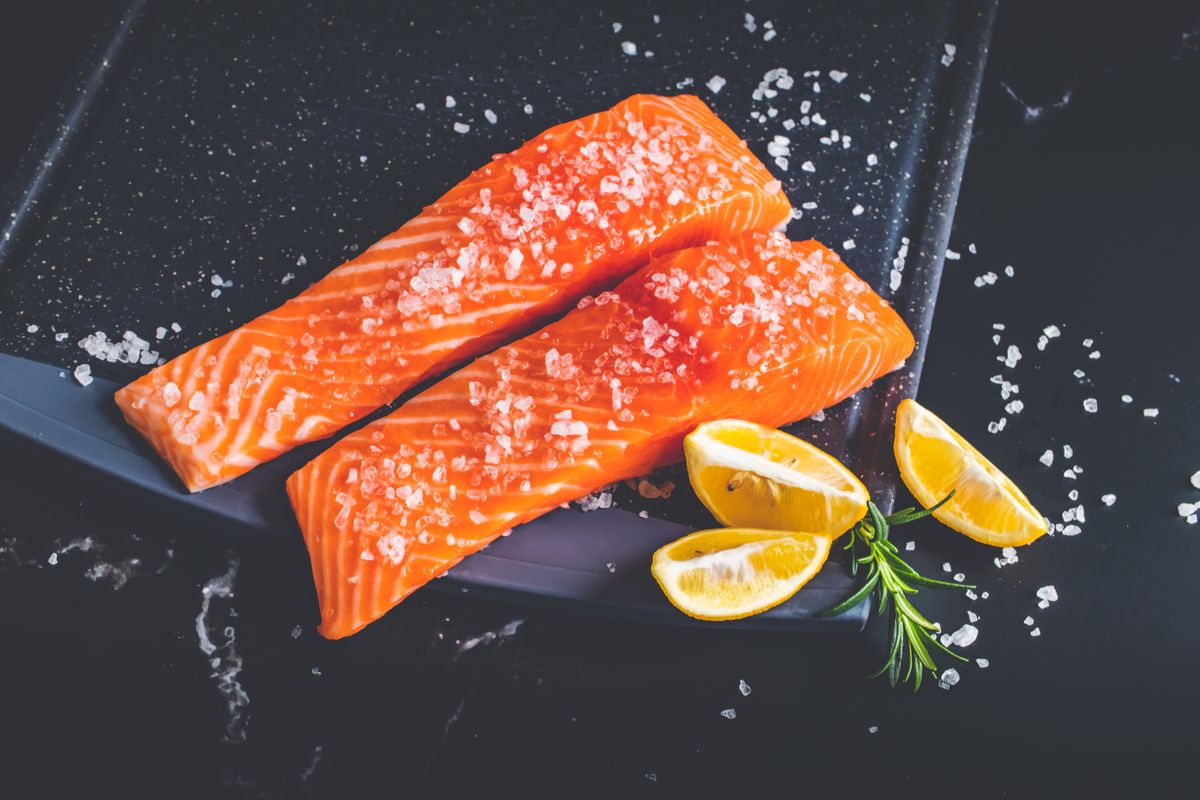
- Colour: the flesh turns from deep, translucent orange to opaque, paler pink all the way through.
White beads appearing on the surface are albumin, a protein pushed out as the fish cooks. A little is normal, but lots of it means the salmon is overcooked or was cooked too hot. Brining the fillets for 10 minutes in salted water (1 tablespoon of salt per 500ml) reduces it.
How to Cook Salmon in an Air Fryer
- Pat the fillets dry with kitchen paper, especially the skin.
- Brush with a little oil and season with salt, pepper and lemon zest, or your chosen glaze.
- Lightly oil the basket or use a perforated liner so the skin doesn’t stick.
- Place skin-side down, in a single layer with space between fillets.
- Cook at 180°C for the time in the chart, checking a minute or two early.
- Rest for 2 minutes, then lift the flesh away from the skin with a fish slice if you don’t want to eat the skin.
Skin On or Skin Off?
Skin-on fillets are easier to cook well. The skin protects the bottom of the fillet from the hot basket and helps hold it together when you lift it out. It won’t go as crispy as pan-fried skin when it’s underneath, but if you love crispy skin, cook it skin-side up for the last 3–4 minutes at 200°C after patting the skin very dry. Skinless fillets work well too; just oil the basket or use a liner and check them a minute earlier.
Cooking Salmon from Frozen
Individually frozen fillets can go straight into the air fryer. Rinse off any ice glaze, pat dry, and cook at 180°C for 6 minutes. Then brush with oil, season (it will stick now the surface has thawed) and cook for another 8–12 minutes until the centre is opaque and flaky. Frozen fillets that are stuck together should be separated first, or thawed in the fridge overnight.
Simple Glazes and Seasonings
- Lemon, garlic and dill: olive oil, crushed garlic, lemon zest and chopped dill.
- Honey and soy: 1 tbsp honey, 1 tbsp soy sauce and a little grated ginger. Brush on for the last 4 minutes so the honey doesn’t burn.
- Cajun: smoked paprika, garlic powder, cayenne, thyme and oregano.
- Pesto crust: spread a teaspoon of pesto over the top and sprinkle with breadcrumbs.
- Sweet chilli: brush with sweet chilli sauce in the last 3 minutes and finish with spring onions.
What to Serve with It
Salmon is quick enough to cook while your sides finish. Try it with air fryer vegetables like asparagus or crispy broccoli, new potatoes, rice or a simple salad.
Storing Leftovers
Refrigerate cooked salmon within two hours and eat it within two days. It’s lovely cold in salads. To reheat, cover loosely with foil and warm at 150°C for 4–6 minutes; a lower temperature stops it drying out.
Frequently Asked Questions
How do I know when salmon is actually done without cutting it open?
Press the thickest part gently with a fork: cooked salmon flakes easily and looks opaque. A probe thermometer reading 60–63°C is the most reliable check.
Why did my salmon stick to the basket?
The skin or flesh was in direct contact with a dry basket. Lightly oil the basket, pat the skin dry before cooking, or use a perforated parchment liner.
Can I cook salmon with the skin facing up?
Yes. It crisps the skin more, but the flesh underneath is more exposed to the hot basket, so oil the basket well. Skin-side down for most of the cooking, then skin-side up for the last few minutes, gives the best of both.
Do I need to flip salmon in an air fryer?
No. Fillets cook evenly without flipping, and turning them risks breaking the flesh.
What temperature should I cook salmon at?
180°C is the best all-round temperature. Higher temperatures brown the outside faster but make it easier to overcook the middle.
For more fish and meat ideas, see our meat and seafood collection, or check safe temperatures with the Doneness Checker.