Quick answer: Air fry a medium boneless chicken breast (180–220g) at 180°C (350°F) for 18–20 minutes, flipping halfway, until the thickest part reaches at least 74°C (165°F). Large breasts over 250g need 22–25 minutes, and butterflied or flattened breasts need only 12–14. Rest for 5 minutes before slicing.
Chicken breast is the cut most people want to cook in an air fryer, and the one most people get wrong. It has almost no fat to protect it, so the difference between juicy and dry is only a few degrees. The good news is that the air fryer is well suited to it: the fan browns the outside quickly while the moderate temperature lets the centre catch up. This guide covers times by size, how to stop it drying out, cooking from frozen, seasoning ideas and what to do when it goes wrong.
Air Fryer Chicken Breast Cooking Times
These times assume a standard 4–6L basket air fryer, boneless breasts in a single layer with space around each one, and a flip halfway through. Compact 2–3L models tend to run hotter, so check 2–3 minutes early the first time.
| Chicken breast | Weight / thickness | Temperature | Time |
|---|---|---|---|
| Small breast or mini fillets | 120–150g | 180°C (350°F) | 14–16 mins (mini fillets 8–10) |
| Medium breast | 180–220g | 180°C (350°F) | 18–20 mins |
| Large breast | 250–300g | 180°C (350°F) | 22–25 mins |
| Butterflied or flattened to 1.5cm | Any | 190°C (375°F) | 12–14 mins |
| Breaded breast (homemade) | 180–220g | 190°C (375°F) | 18–20 mins |
| Bone-in, skin-on breast | 300–400g | 180°C (350°F) | 28–35 mins |
Treat these as starting points. Breast size varies a lot between packs, and thickness matters more than weight: a wide, thin breast cooks faster than a short, plump one of the same weight. The only reliable test is the internal temperature, which is why a cheap probe thermometer is the best accessory you can buy for an air fryer. For other foods, the Cooking Time Calculator gives times for over 200 items.
How to Cook Chicken Breast in an Air Fryer
- Even out the thickness. If one end is much thicker than the other, put the breast between two sheets of baking paper and bash the thick end with a rolling pin until it is roughly even. This is the single biggest fix for dry chicken, because the thin end no longer overcooks while the thick end catches up.
- Pat it dry. Use kitchen paper to remove surface moisture. A wet surface steams rather than browns.
- Oil and season. Rub with about half a teaspoon of oil per breast, then season generously. The oil helps the seasoning stick and gives better colour.
- Preheat for 3 minutes at 180°C if your model allows it. It is not essential, but it gives a better sear on the first side.
- Cook in a single layer. Leave a gap between breasts so the air can circulate. Two medium breasts fit comfortably in most 4L baskets.
- Flip halfway, then check the temperature in the thickest part a couple of minutes before the end of the time.
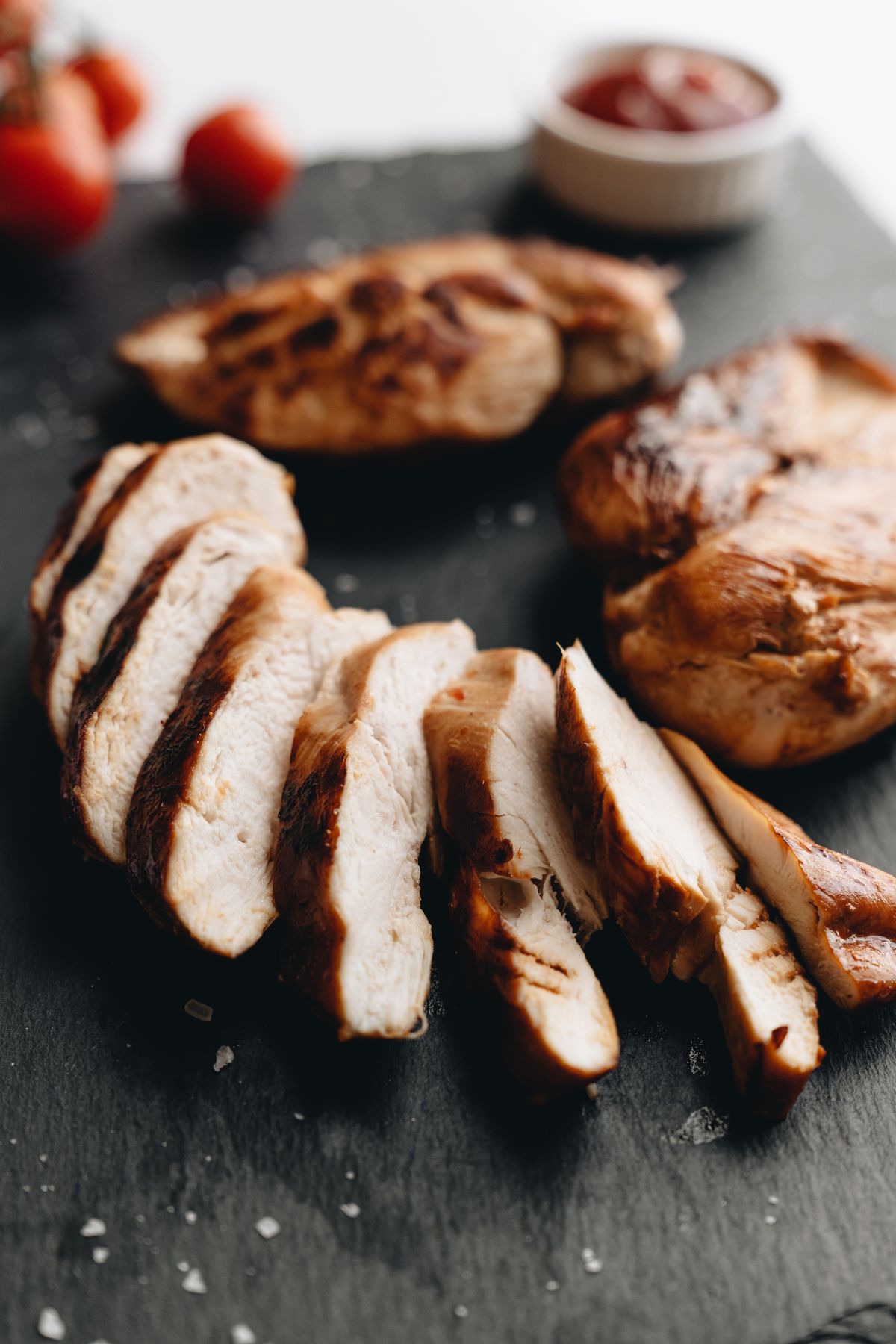
- Rest for 5 minutes on a board before slicing. The juices settle back into the meat instead of running out.
How to Keep Air Fryer Chicken Breast Juicy
Take it out at the right temperature
Chicken is safe once the thickest part reaches 74–75°C (UK food-safety guidance is 75°C, or 70°C held for two minutes). The temperature keeps rising by a degree or two while it rests, so there is no benefit in cooking it to 80°C “to be safe”. Every degree beyond the safe point squeezes out more moisture.
Use a quick brine
If you have 30 minutes, soak the breasts in a simple brine of 1 tablespoon of salt dissolved in 500ml of cold water, in the fridge. Rinse, dry well and season as normal. Brining helps the meat hold on to its moisture during cooking, and it is the closest thing to a guarantee of juicy chicken breast.
Don’t go too hot
200°C seems tempting for speed, but with a lean cut it browns the outside before the middle is done. 180°C gives the centre time to cook while the outside colours nicely. Breaded chicken is the exception: 190°C helps the coating crisp.
Choose the right portion
Very large supermarket breasts (300g+) are hard to cook evenly. Butterflying them, or slicing them in half horizontally into two thinner escalopes, gives faster, more even results.
Cooking Chicken Breast from Frozen
You can cook individually frozen chicken breasts straight from the freezer, as long as they are separated and not frozen together in a block. Cook at 180°C for roughly 50% longer than fresh: about 25–30 minutes for a medium breast. Season after the first 10 minutes, once the surface has thawed enough for seasoning to stick, and always check the centre reaches 74–75°C. Frozen breasts are less forgiving because the outside dries while the middle thaws, so thawing overnight in the fridge gives a better result when you have time.
Easy Seasoning Ideas
- Everyday: smoked paprika, garlic granules, salt and black pepper.
- Lemon and herb: lemon zest, dried oregano, thyme and a little olive oil.
- Fajita: chilli powder, cumin, smoked paprika and a pinch of sugar. Slice and serve in wraps.
- Tandoori-style: marinate in yoghurt with tandoori spice for at least an hour, then shake off the excess before cooking at 190°C.
- Honey and soy: brush on a mix of honey and soy sauce for the last 3 minutes only, so the sugar doesn’t burn.
Storing and Reheating
Cool leftover chicken quickly, refrigerate it within two hours and eat it within two days. To reheat, slice it, cover loosely with foil and warm at 160°C for 5–6 minutes until steaming hot all the way through. Our Leftover Reheat Guide has times for other foods.
Frequently Asked Questions
Why is my air fryer chicken breast always dry?
Almost always because it was cooked past 75°C, or because one end was much thinner than the other. Flatten the breast to an even thickness, cook at 180°C rather than 200°C, check the temperature early and rest it before slicing.
Do I need to flip chicken breast in an air fryer?
Yes. The top gets more direct heat from the element, so flipping halfway gives even colour and helps the centre cook evenly.
Can I cook chicken breast from frozen?
Yes, if the breasts are separate. Allow about 50% more time, around 25–30 minutes at 180°C for a medium breast, and check the centre reaches at least 74°C.
Do I need oil?
Not strictly, but a light coating of oil gives better colour and stops seasoning from burning or falling off.
How do I know it’s cooked without a thermometer?
Cut into the thickest part: the meat should be white all the way through with no pink, and the juices should run clear. A thermometer is far more reliable and stops you overcooking it.
For more ideas, see our air fryer chicken thighs guide, our crispy chicken wings, or the full meat and seafood collection. Check safe temperatures for any meat with the Doneness Checker.