Quick answer: Most food needs no oil to 1 tablespoon (15ml) of oil per batch in an air fryer. Frozen chips, nuggets and other pre-cooked frozen food need none. Fresh chips and vegetables need about 1 tablespoon per 500g, and lean meat like chicken breast needs about 1 teaspoon. Toss or brush the oil onto the food, and never pour oil into the basket or drawer.
That’s a big change from a deep fryer, which needs litres of oil. But “oil-free” isn’t quite the whole story. A little oil is what turns dry, pale food into golden, crispy food, and too much leaves food greasy and makes the air fryer smoke. Below is how much to use for each food, which oils work best, and how to apply it.
How Much Oil to Use in an Air Fryer: Chart by Food
Amounts are for one standard batch in a 4–6 litre basket. If you cook a smaller amount, use less oil, not the same amount.
| Food | Oil per batch | How to apply |
|---|---|---|
| Frozen chips, wedges, hash browns | None | Cook straight from frozen |
| Frozen nuggets, fish fingers, breaded fish | None | Already coated in oil at the factory |
| Homemade chips (500g potatoes) | 1 tbsp (15ml) | Dry the chips well, then toss in a bowl |
| Roast potatoes (500–750g) | 1–1½ tbsp | Toss after parboiling and roughing up |
| Vegetables: broccoli, sprouts, peppers (500g) | 1 tbsp | Toss in a bowl with seasoning |
| Chicken breast (2 fillets) | 1 tsp (5ml) | Brush or rub over both sides |
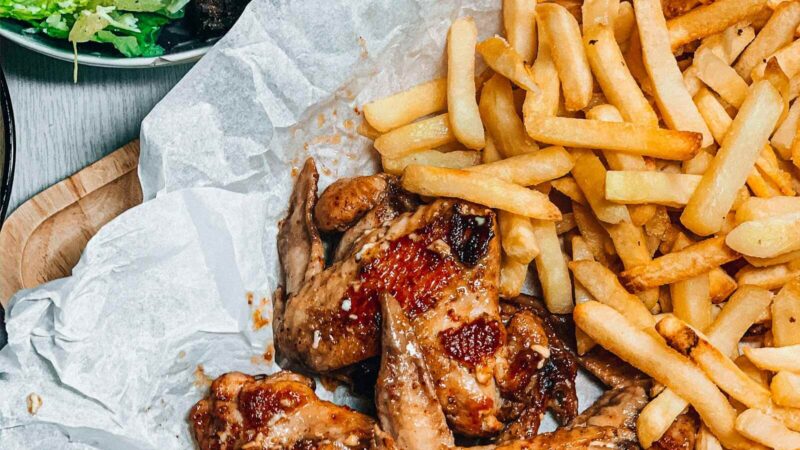
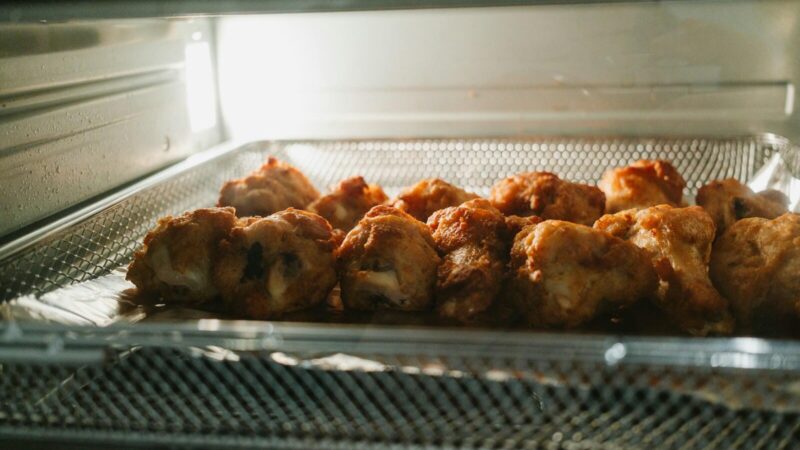
| Chicken thighs (skin on), wings | None needed | Pat the skin dry; the fat renders out |
| Sausages, bacon, burgers | None | They release their own fat |
| Salmon and oily fish | None to ½ tsp | A light brush stops the skin sticking |
| White fish fillets | ½–1 tsp | Brush over the top |
| Homemade breaded food (schnitzel, chicken strips) | 1–2 tsp | Mist both sides so the crumb turns golden |
| Halloumi, tofu | 1 tsp | Light spray or brush |
| Pumpkin seeds, chickpeas | 1 tsp per cup | Toss to coat evenly |
| Reheating chips or roast potatoes | A light mist | Optional, but brings back the crunch |
Want the calories worked out? Our air fryer oil usage calculator compares the oil and calories in air frying against shallow and deep frying for your portion size.
Foods That Don’t Need Any Oil
An air fryer is a small, powerful fan oven. It crisps food by blowing very hot air over the surface, so food that already has fat on it or in it doesn’t need any more.
- Frozen oven chips and frozen breaded food. Nearly all of them are part-fried or sprayed with oil before freezing, so adding more just makes them greasy. See our frozen chips times and nuggets and fish fingers guide.
- Fatty meat. Sausages, bacon, burgers, pork belly and skin-on chicken thighs release plenty of fat as they cook. Chicken thighs crisp up in their own fat.
- Oily fish such as salmon and mackerel.
- Food that’s reheated and was cooked in oil the first time, like takeaway chips or fried chicken. A light mist helps chips, but it isn’t essential. Our reheating guide has times for each.
How to Add Oil to Food in an Air Fryer
The rule that matters most comes straight from the manufacturers: put the oil on the food, not in the air fryer. Philips, which launched the first Airfryer in 2010, tells owners never to pour oil into the pan. Loose oil collects in the drawer, overheats and smokes, and it doesn’t make the food any crispier.
- Dry the food first. Pat meat dry with kitchen paper, and dry washed vegetables or soaked chips thoroughly. Oil won’t stick to wet food, and water steams instead of crisps.
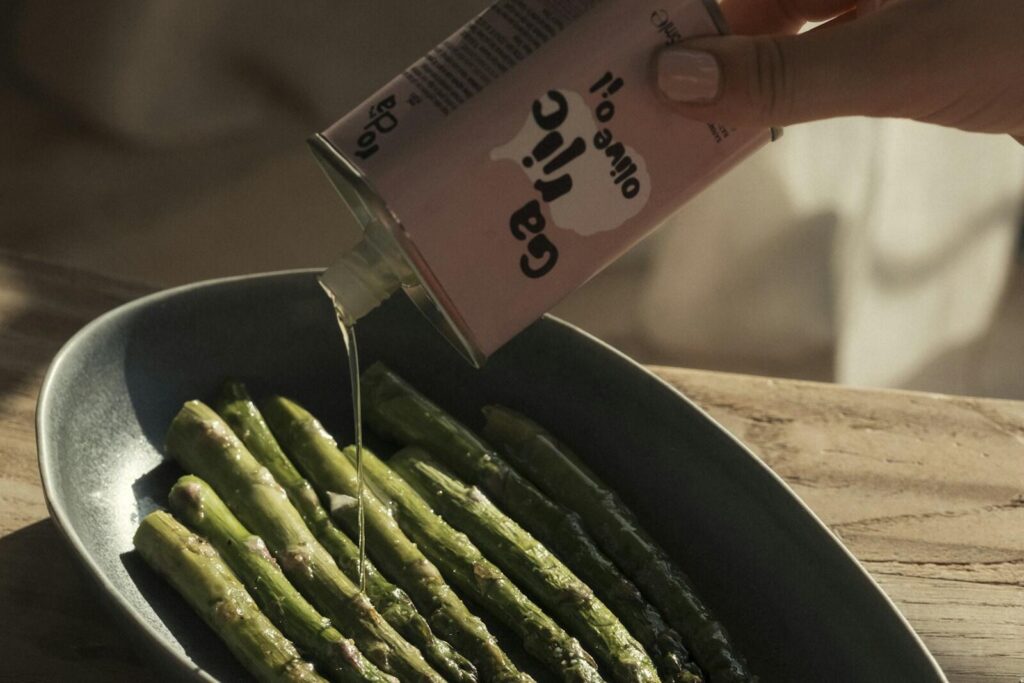
- Toss in a bowl. Put the food in a mixing bowl, add the oil and seasoning, and toss with your hands or a spoon until every piece has a thin shine. This uses the least oil for the most even coating.
- Or brush it on. A pastry brush works best for chicken breasts, fish fillets and anything you don’t want to break up.
- Or use a refillable oil mister. A pump-action mister filled with your own oil gives a fine, even layer on breaded food and halloumi.
- Load a single layer and shake or turn halfway. Overcrowding blocks the airflow, which causes more soggy food than lack of oil does. If that’s your problem, read why your air fryer food isn’t crispy.
The Best Oils for an Air Fryer
Most air fryers cook at up to about 200°C (400°F), so choose an oil that’s comfortable at that temperature. Refined oils generally have a higher smoke point than unrefined ones. Smoke points vary by brand and quality, so treat the figures below as a rough guide.
| Oil | Approx. smoke point | Good for |
|---|---|---|
| Rapeseed (vegetable) oil | 200–230°C | Everyday choice: neutral, cheap, ideal for chips and veg |
| Sunflower oil (refined) | 225–230°C | Chips, breaded food, chicken |
| Groundnut (peanut) oil | About 230°C | High-heat crisping, chicken wings |
| Avocado oil (refined) | 250–270°C | The highest heat; pricier |
| Light or refined olive oil | About 220–240°C | Vegetables, fish, Mediterranean dishes |
| Extra virgin olive oil | About 190–210°C | Fine at 180°C and below; brush on for flavour |
| Butter | About 150°C | Avoid at high heat; it burns. Add melted butter after cooking |
If you see smoke while cooking, check the drawer for pooled oil or fat first. Our guide to why an air fryer smokes explains the difference between harmless white smoke and the black smoke that means you should switch off.
Can You Use Cooking Spray in an Air Fryer?
You can spray food with oil, but avoid aerosol cooking sprays on the basket itself. Appliance experts quoted by Ideal Home warn that the propellants and additives in many aerosol sprays, such as soy lecithin, can leave a sticky film that builds up and wears down the non-stick coating over time.
- Better: a refillable pump mister, a pastry brush, or tossing in a bowl.
- If you use a low-calorie spray, spray the food over the sink or a plate, not inside the basket.
- Already got sticky residue? Soak the basket in warm soapy water and use a soft brush. Our monthly deep clean routine walks through it.
A damaged, flaking coating is a separate problem. See air fryer basket coating peeling for whether it’s still safe to use, and are air fryers toxic? for the facts on non-stick coatings.
What Happens If You Use Too Much or Too Little Oil?
Too much oil
- Food comes out greasy and soft instead of crisp.
- Excess oil drips into the drawer, overheats and smokes.
- Sticky residue builds up on the basket and heating element.
- You add calories for no benefit: each tablespoon of oil is about 120 calories.
Too little oil
- Fresh potatoes and vegetables dry out and turn leathery rather than golden.
- Homemade breadcrumb or flour coatings stay pale and powdery.
- Lean food like chicken breast and white fish can stick to the basket.
If food is dry and pale, add oil ½ teaspoon at a time next batch. If it’s greasy, halve the amount.
Air Fryer vs Deep Fryer: How Much Less Oil?
A home deep fryer typically holds 2–4 litres of oil. An air fryer uses up to one tablespoon. That’s why air-fried chips usually have far less fat than deep-fried ones, although the exact difference depends on the food and how much oil you add. For a full side-by-side, read air fryer vs deep fryer, or compare fresh vs frozen fries if you’re deciding which chips to make.
Frequently Asked Questions
Do you need oil in an air fryer?
No. An air fryer cooks without any oil. Frozen food and fatty meat need none at all. A small amount, around 1 teaspoon to 1 tablespoon, helps fresh potatoes, vegetables and lean meat turn golden and crisp.
How much oil do you put in an air fryer for chips?
Homemade chips need about 1 tablespoon of oil per 500g of potatoes, tossed in a bowl after drying. Frozen oven chips need no oil because they’re already coated.
Where do you put oil in an air fryer?
On the food, never in the basket or drawer. Toss the food in a bowl with the oil or brush it on. Oil poured into the air fryer pools, overheats and smokes.
What is the best oil for an air fryer?
Rapeseed (vegetable), sunflower, groundnut and avocado oils all handle air fryer temperatures well. Extra virgin olive oil is fine for cooking at 180°C or below. Avoid butter at high heat because it burns.
Can I use olive oil in an air fryer?
Yes. Light or refined olive oil works at all usual air fryer temperatures. Extra virgin olive oil has a lower smoke point, so it’s best brushed on for flavour or used at 180°C and below.
Are low-calorie spray oils bad for air fryers?
Aerosol sprays with propellants and lecithin can leave a sticky build-up that damages the non-stick coating over time. If you use one, spray the food away from the basket, or switch to a refillable pump mister.
More air fryer guides: cooking time calculator · crispy Brussels sprouts · roast potatoes · halloumi · should you preheat?